Good Think: The Science of Smarter Teams: Damon Centola
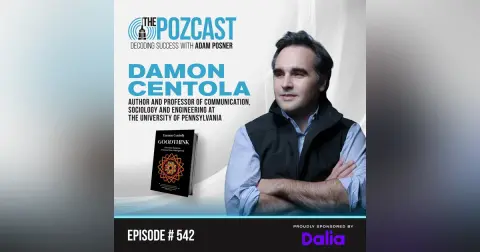
Damon Centola, UPenn professor and author of Good Think, explains why smart people can make poor decisions together—and how better network structures can unlock collective intelligence. He challenges the traditional fear of groupthink, arguing that the problem isn't collaboration itself, but unequal influence, hierarchy, and limited information flow. The conversation covers organizational design, Building 20 at MIT, AI’s risk of homogenizing thought, and how leaders can build teams where better ideas rise. Damon is the Elihu Katz Professor of Communication, Sociology, and Engineering at the University of Pennsylvania, the founding director of its Network Dynamics Group, and a 2026 Guggenheim Fellow. He is one of the world’s leading experts on social networks, behavior change, and collective intelligence. His latest book, Goodthink: The New Science of Collective Intelligence, challenges what we think we know about groupthink and reveals how the structure of our networks can make teams more creative, connected, and intelligent. On episode #542 of #thePOZcast, we unpack why the smartest person does not always create the smartest team, how ideas and behaviors really spread, and what leaders can do to unlock the intelligence already inside their organizations. Book: Goodthink: The New Science of Collective Intelligence (MIT Press; October 13) Website & social media links: https://ndg.asc.upenn.edu/ www.damoncentola.com (in progress) Instagram: https://www.instagram.com/damoncentola/ X: https://x.com/DamonCentola

 Apple Podcasts
 Spotify
 Castro
 RSS Feed
 Thanks for listening, and please follow us on Insta @NHPTalent and www.youtube.com/thePOZcast
For all episodes, please check out www.thePOZcast.com
#thePOZcast is proud to welcome Dalia as our newest partner. Dalia helps employers convert more career-site traffic into qualified applicants by giving job seekers a universal candidate profile that eliminates repetitive applications and streamlines the application process. Learn more (link below)
https://www.dalia.co/audit?utm_source=pos
Key Takeaways
- Hiring a smarter leader does not fix a broken team structure.
- The key question is: who talks to whom, and who listens to whom?
- Hierarchy can suppress useful insights from people closest to the work.
- Great meetings create equal influence—not just equal attendance.
- Strong teams help individuals learn while improving group decisions.
- MIT’s Building 20 shows the power of unplanned, cross-disciplinary collisions.
- AI can accelerate thinking, but it can also flatten diversity and reinforce existing biases.
- Leaders should assess AI by whether it makes humans more capable over time.
- High-performing teams can decline when their best people are poached; management must plan for attrition.
- Monday-morning move: create space for lower-power voices to influence the discussion.
Chapters
00:00 Welcome + Damon’s background
04:00 Growing up in a Quaker community
09:00 Is higher education still worth it?
13:00 What groupthink really means
20:00 Why smart teams make bad decisions
28:00 Structural intelligence and information flow
36:00 Hospital hierarchies and hidden organizational red flags
45:00 MIT Building 20 and accidental innovation
55:00 Designing smarter, more egalitarian meetings
1:03:00 AI, bias, and collective intelligence
1:15:00 When successful systems undermine themselves
1:23:00 The one leadership change to make Monday morning