The Part After Cancer Nobody Prepares You For — A Conversation Between Two Survivors: Geoffrey Rogow & Adam Posner
WATCH: https://youtu.be/h0moU300i-w
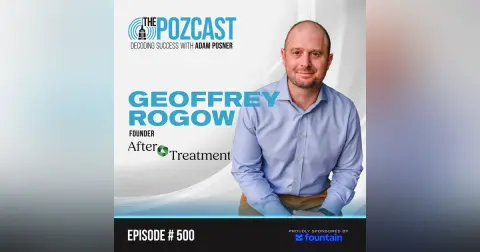
Episode 500 of the POZcast is unlike any other in the series. It’s the conversation Adam Posner has been building toward for seven years — without realizing it until his own diagnosis. Guest Geoffrey Rogow is a two-decade veteran of financial journalism at The Wall Street Journal and now the BBC, founder of After Treatment — a platform serving more than 20 million cancer survivors — and author of the forthcoming book I'm Alive: Now What?. Diagnosed with primary mediastinal non-Hodgkin’s lymphoma at 30, Geoffrey underwent months of chemotherapy and has been in remission for more than a decade. Adam was diagnosed with Stage 3A Hodgkin’s lymphoma at 45 after a routine cardiac scan prompted by a family tragedy. He completed treatment in September 2025 and is now two scans post-remission.
What follows is one of the most honest and human conversations about cancer survivorship anywhere. They unpack diagnosis, chemotherapy, fatigue, steroids, hair loss, communication breakdowns, fertility decisions made under pressure, the lingering financial impact, and the identity questions that don’t resolve when treatment ends. Geoffrey also shares his framework for a biannual life check-in — evaluating whether you’re truly on the path you want to be on, professionally, personally, and relationally — along with his concept of “ambition lanes,” a powerful reframing for life after cancer. His final question to Adam — “Are you getting the support you need?” — becomes the emotional center of the episode.
This is an episode for anyone who has had cancer, loves someone who has, or is currently navigating it. It’s also for anyone who has hit a milestone and wondered what they were really building toward. Seven years. Five hundred episodes. This one matters.
Connect with Geoffrey: https://www.linkedin.com/in/geoffrey-rogow/
Subscribe to After Treatment: https://www.after-treatment.com/

 Apple Podcasts
 Spotify
 Castro
 RSS Feed
 Thanks for listening, and please follow us on Insta @NHPTalent and www.youtube.com/thePOZcast
For all episodes, please check out www.thePOZcast.com
This special episode is brought to you by our dear friends at Blood Cancer United. An organization very near and dear to me.
I’m here to remind you to give to causes that make a difference. You want to help but you don’t know where to start? Blood Cancer United is at the top of my list. They are the global leader in helping patients and families with blood cancer, and your dollars fund research, patient support, and advocacy. Please give today here:
Thank you for supporting this important mission.
Learn more and donate here: https://pages.lls.org/voy/nyc/nyclls26/aposner
CHAPTERS:
00:00 – 500 Episodes: Introducing Geoffrey Rogow Adam opens the milestone episode, introduces Geoffrey Rogow — journalist, survivor, founder, author — and sets the tone for the most personal conversation in the show's seven-year history.
03:00 – Who Were You Before? The Person Before Treatment Geoffrey's life before diagnosis: 30 years old, living in New York and Sydney, feeling infallible, driven by professional ambition. And Adam's contrast — a father of two at 45, diagnosed only because he went to a cardiologist after his brother-in-law died.
07:00 – The Diagnosis: Two Very Different Moments Geoffrey's blood clot in the night that saved his life. Adam's cardiologist scan caught a mass nobody expected. The two very different ways a diagnosis lands — one like a movie, one like a text message.
13:00 – Four Days vs. Six Weeks: The Window Before Treatment Geoffrey had four days between diagnosis and chemotherapy. Adam had six weeks. What that difference does to your mind, your fear, your processing — and why no two cancer stories are the same.
17:00 – The Thing Nobody Tells Young Adults: Fertility. The Vanderbilt study found 50% of young adults diagnosed with cancer are never told about their fertility options before treatment. Geoffrey's sperm banking story. Adam's moment of levity. The organizations that exist to help — and why you should use them.
23:00 – Chemotherapy: The Reality Nobody Films Steroids that make you feel like Batman. Fatigue that puts you to bed at 1 PM. The taste of treatment — Geoffrey's: a burning Nike Air Max. Adam's: Sour Patch Kids and Shrek's condom. The rhythm of treatment cycles and the crash that follows.
30:00 – Hair Loss: The Moment It Hits You Not just the hair on your head — all of it. Geoffrey's Jewish mohawk and the cat photos. Adam's man bun, the shower, the wall of clumps, the hairdresser call. Why are eyebrows and eyelashes the parts nobody prepares you for?
37:00 – Going Out in Public Without Eyebrows Geoffrey at his best friend's wedding, feeling like a freak. Adam at a bar mitzvah two weeks post-treatment, cancer beanie and all. Why "you look great" hits differently when you don't recognize yourself in the photos.
42:00 – Tribes, Villages & Crisis Language Geoffrey's lesson: his tribe was too small — just his wife and the cat. The mistake he'd change. Adam's: an oversharer married to a shield, learning to lean on his guy friends so his wife didn't have to carry everything. What "crisis language as a couple" actually means.
49:00 – Tolerance for Bullshit: The Larry David Effect What cancer does to your patience for other people's bravado. Geoffrey's bar story, running out into Times Square and crashing full speed into Elmo. The anger that's real, and the work it takes not to carry it forever.
55:00 – The Biannual Check-In: A Framework for Purposeful Change A scheduled, structured personal evaluation every six months — professional path, relationships, health, direction. The check-in that led Geoffrey to leave the Wall Street Journal after 21 years. Why you can't make the changes when the warning lights are flashing; you have to make them later, in clarity.
61:00 – Scanxiety: The Incurable Side Effect of Survivorship Geoffrey's scan is next Wednesday. He started thinking about it two weeks ago. The reality that scanxiety doesn't diminish with time — it sometimes gets worse. What helps, what stops helping, and why there's no permanent answer.
66:00 – After Treatment: The Part Nobody Celebrates The financial reality: bill negotiations, illegal anesthesiologist charges, state-specific protections, hospital programs for lower-income patients. Life insurance rejection at 35. Career decisions constrained by healthcare costs. The bills that arrive 18 months later asking "didn't I already pay this?"
73:00 – Ambition After Cancer: Don't Change the Level, Change the Lane The advice from career coach Michelle Woodward: keep the same level of ambition even if you have to find a different lane. Geoffrey's Hong Kong trip — the first time after treatment he felt like himself professionally again. Adam's silver lining of leaning into tech during treatment.
79:00 – Writing It Down: The Value of Documentation Adam's Super Whisper app diary — before and after every treatment session. Geoffrey's 14 years of running away from his cancer story, and what writing the book finally unlocked. Why every survivor should find their version of processing.
85:00 – I'm Alive: Now What? — The Book Geoffrey's nine-chapter guide for survivors — money, career, physical health, mental health, family planning, caregiving, purpose, the business of advice — built around real people's stories paired with expert guidance. Pre-order at after-treatment.com/the-book.
91:00 – Are You Getting the Support You Need? Geoffrey's question for Adam — and for every survivor. The cancer imposter syndrome that comes with a high-survival-rate diagnosis. Why you can't let anyone take away what you went through, and why the work doesn't end at remission.
97:00 – North Stars: What Keeps You Focused Geoffrey's: a willingness to change his North Star — short-term, practical, written down, evaluated regularly. Adam's: being the best example for his kids and leaving the world better than he found it. How cancer changes your definition of success.
104:00 – 500 Episodes: Thank You Adam closes the milestone episode with gratitude — for the guests, the listeners, seven years of consistency, and what comes next.
TAKEAWAYS:
1. The Diagnosis Is Never Like the Movies — Except When It Is Geoffrey's came in an ER at 30. Adam's in a text from his cardiologist. No two stories are the same — but both changed everything.
2. 50% of Young Adult Cancer Patients Are Never Told About Fertility Options A Vanderbilt study found half of young adults aren't counseled on fertility preservation before treatment starts. The window is measured in days. Make sure this conversation happens first.
3. The Biannual Check-In Is the Most Powerful Tool for Purposeful Change Twice a year, scheduled, with a workbook: evaluate your path, relationships, and direction — in calm, not crisis. The check-in that led Geoffrey to leave 21 years at the Wall Street Journal.
4. Don't Change the Level of Your Ambition — Change the Lane If cancer takes away what you were world-class at, find another lane at the same level. Don't shrink. Redirect. That's not a lesser life — it's a different one.
5. Your Relationship With Time and Bullshit Changes — But Differently for Everyone Every survivor agrees on two things: time feels different, and their tolerance for bullshit has shifted. Geoffrey went full Larry David. Adam found unexpected clarity. The work is figuring out which version of you emerged.
6. Cancer Exposes Your Crisis Language as a Couple The couples who survive this well learn how to communicate what they need, what not to say, and what to let breathe. It's practiced, not instinctive.
7. Scanxiety Is Real, Incurable, and Changes Over Time What helped before may stop helping. Survivors need to plan for this, not be surprised by it.
8. The Financial Reckoning Comes Long After Treatment Ends Medical bills stay higher forever. Many are negotiable. Some are illegal. Own the advocacy, ask the questions, build the spreadsheet.
9. Write It Down — In Whatever Form Works for You Adam used Super Whisper before and after every treatment. Geoffrey wrote a book 14 years later. The form doesn't matter. Externalizing the experience gives you a time capsule you can go back to.
10. Are You Getting the Support You Need? Just the honest, periodic question. What you went through is not nothing — and the work doesn't end at remission.
11. You Are Different Now — Not Better or Worse. Different. Not better, not worse. Fundamentally changed in ways that can't be fully accounted for. That difference isn't a loss. The work is learning to live in the new timeline.